


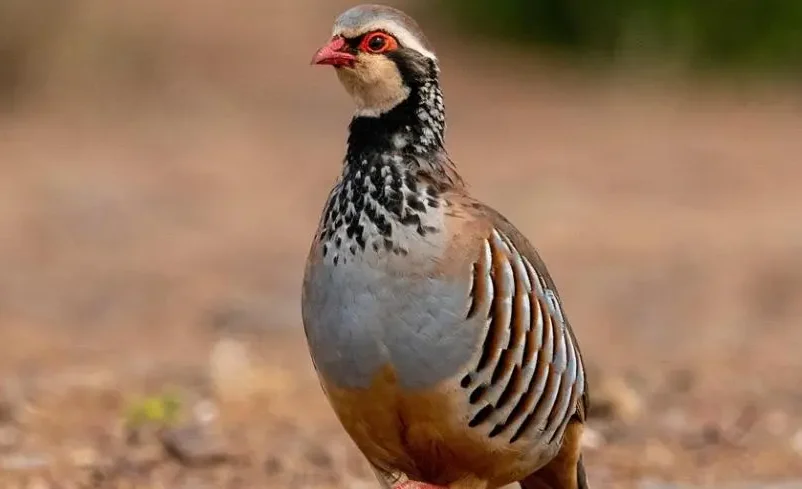
An unprecedented study published in Oikos with the participation of the ICO and CREAF has analyzed 20 years of evolution in European bird populations and concludes that drought is the primary threat in the Mediterranean, while torrential rains cause a decline on a European scale.
According to the team, the underlying causes may be the decrease in food (such as insects) and water during periods of drought. Furthermore, torrential rains can destroy nests and injure birds, especially during hailstorms.
One option to improve survival during drought would be to restore water ponds, which are also useful for other animals.
The storm Filomena covered Spain with extreme snowfall in a matter of days and, in addition to the impact on the population, scientific studies have confirmed that birds such as the Red-legged Partridge (Alectoris rufa) and the Dupont’s Lark (Chersophilus duponti) suffered a sharp decline. Now, research recently published in the scientific journal Oikos and signed by various entities from Catalonia, including the CTFC, CREAF, and the ICO, has analyzed for 20 years the impact of extreme climatic episodes on the European bird population and demonstrates, for the first time, that drought and torrential rains are the climatic variables that cause the greatest decline in the bird population in the Mediterranean basin. Furthermore, they have also confirmed that the negative impact of heavy rains is not limited to this territory but causes a decline in birds throughout Europe.
Among the reasons that may explain this impact, the authors point out that drought increases the mortality of insects, such as butterfly caterpillars, and causes plants to grow less and produce fewer fruits and seeds. This has a cascading effect, as birds have less food to feed their chicks, who need a lot of protein, and the survival rate decreases. In the case of intense rains—increasingly frequent in the Mediterranean—these break nests, can cause the loss of eggs or the death of chicks due to chilling, and, in extreme situations such as hailstorms, injure adults as well.
“With this study, we have demonstrated a clear relationship between water scarcity in Southern Europe and the decline in the number of individual birds. In addition, we also detected another threat, in this case common to all regions of Europe: extreme precipitation,” explains Sergi Herrando, a researcher at CREAF, co-author of the study, and chairman of the European Bird Census Council. In the case of the Mediterranean, the fact that there are fewer birds can reduce key functions they perform, “such as seed dispersal or insect pest control,” adds Herrando.
Another finding has been that the increase in temperature favors resident birds in Northern Europe, probably because there is a longer favorable period for reproduction. In contrast, it harms long-distance migrants that arrive in the north in spring, as the life cycles of plants and insects become desynchronized and, when they arrive, there is less food. “A case that has been demonstrated in other research is that of the European Pied Flycatcher (Ficedula hypoleuca), which when it arrives from Africa finds that the caterpillar cycle has advanced and there are no longer as many,” highlights Herrando.
To carry out the research, the team analyzed 20 years of evolution (2002–2022) of bird populations in three major climatic regions of Europe—Mediterranean, Continental, and Boreal—using Catalonia, the Czech Republic, and Sweden as representative territories. “In Catalonia, data from the ICO’s Common Bird Monitoring Scheme (SOCC) have been key to reaching these conclusions,” he adds. In total, the population dynamics of 141 bird species from various habitats—forest, meadow, agricultural, and urban—have been studied, including both resident species and short- and long-distance migrants. These data have been cross-referenced with annual information on three climatic variables: temperature, water availability, and episodes of intense rain.
Water Ponds
According to the team, a simple measure to help birds in the Mediterranean region during drought episodes is to restore the network of small ponds and water points in general, or to build new ones. These ponds can have a direct beneficial effect by allowing birds to drink, and an indirect one by attracting insects. However, they warn that their installation must avoid predation zones, especially by domestic cats. “Ponds, moreover, can be very beneficial for other animal species, such as amphibians,” adds Sergi Herrando.
The work was led by Charles University in Prague and the Czech Academy of Sciences, and is also signed by an international consortium of scientists linked to universities and research centers in Spain, the Czech Republic, and Sweden, among which are the CSIC, the CTFC, the CREAF, and the Catalan Institute of Ornithology, as well as Palacký University Olomouc and Lund University.
Lluís Brotons, a researcher from the CSIC and CREAF, participated from the CTFC. The authors conclude by highlighting that the study “is one of the most complete evaluations carried out so far on how climate conditions the dynamics of bird populations in Europe and will allow us to better refine conservation strategies.”
Scientific Reference
Hanzelka, J., Telenský, T., Brotons, L., Herrando, S., Lindström, Å. & Reif, J. (2025). Latitude-specific responses of European birds’ population growth rates to temperature and water availability. Oikos, 2025: e11460. https://doi.org/10.1002/oik.11460
Last modified: 19 December 2025