


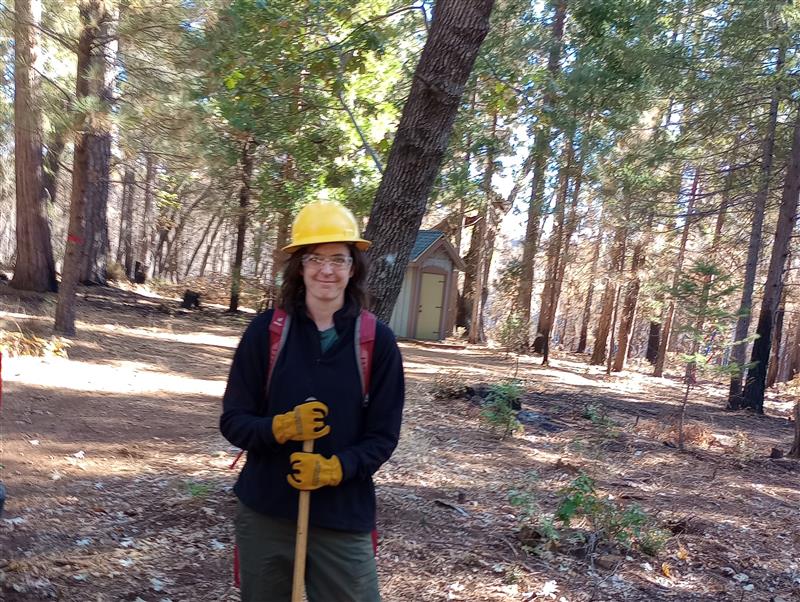
Andrea Duane shares her reflections after two years of research in California, highlighting the role of fire and social involvement in landscape management.
Andrea Duane, associate researcher in the Spatial Ecology group at the Forest Science and Technology Centre of Catalonia (CTFC), and Oscar Garcia, forest engineer from the Government of Catalonia, share the lessons learned during their research stay at the University of California, Davis (USA), in a talk for the center’s staff. Their experience offered an immersion in fire ecology and management, technological innovation, and community involvement, providing key insights to improve the resilience of Catalan ecosystems. The research stay aimed to learn about the changes in fire regimes in California, but the similarities between territories also led them to analyze forest management practices there, gathering data and identifying strategies that could be relevant for the wildfire context in Catalonia.
For both Duane and Garcia, adapting to this new environment brought challenges on multiple levels. Professionally, they had to navigate a complex system involving numerous federal and state agencies with specific responsibilities in forest management and wildfire prevention. On a personal level, the experience was shaped by the logistical challenge of living abroad, requiring constant coordination to balance research and fieldwork with daily life in a different culture.
As they explored California’s forests, the researchers observed parallels with those of Catalonia, such as complex topography and a Mediterranean climate, but with a fundamental difference in temporal scale. In Catalonia, humans have transformed the landscape on a large scale for millennia. In California, humans were present, but it was in 1850 —only 170 years ago— during the Gold Rush, when landscapes changed dramatically. This very recent transformation means that primary forest structures can still be found, with monumental trees reaching ages of 400, 500, or even 3000 years. This biological heritage offers a unique perspective on past forest dynamics.
Historical analysis shows that, before colonization, Indigenous peoples in California used fire frequently to manage the land. When total fire suppression policies were imposed, this balanced cycle was disrupted. The consequences of the “zero fire” policy include today’s critical accumulation of biomass and a shift in forest structure that makes them extremely vulnerable to high‑severity wildfires—an issue that closely mirrors the effects of rural abandonment in Catalonia.
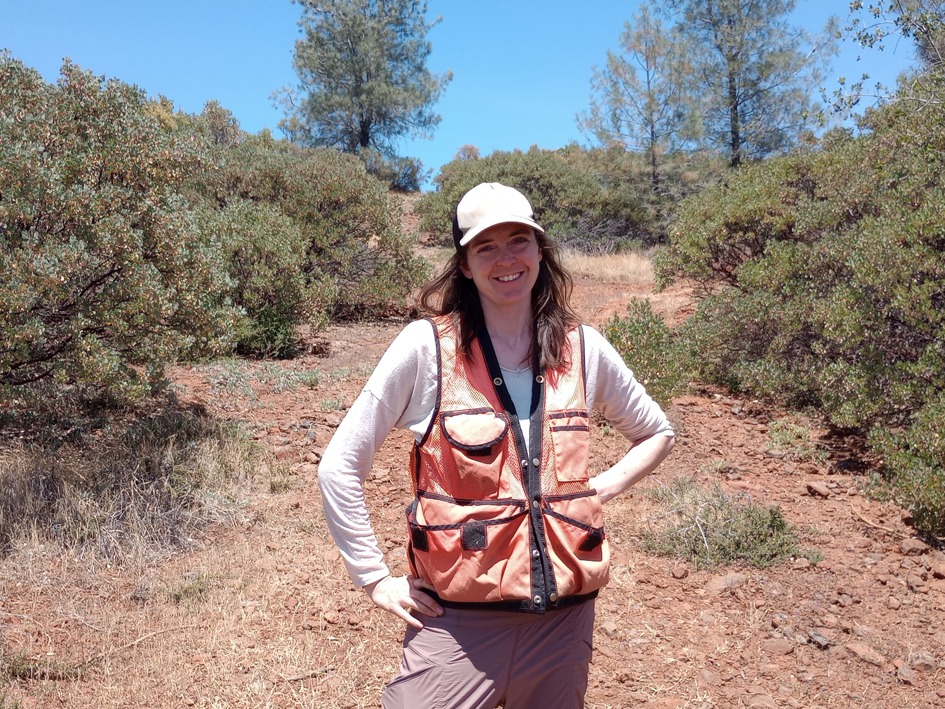
To help mitigate these risks, Duane and Garcia focused part of their research on designing new monitoring methods. They participated in cutting‑edge projects such as the state’s largest shrubland inventory, using high‑resolution LiDAR imagery and artificial intelligence to quantify carbon stocks. These tools help ensure that scientific data reaches administrations and decision‑making agencies in a robust way, especially as California aims to become a zero‑emissions region by 2045.
One of the most valuable lessons for the Catalan context is the model of “fire socialization” through Prescribed Burning Associations. In these groups, landowners, neighbors, tribal members, local managers, students, researchers, and local communities organize to reintroduce fire as a management tool under technical supervision. This approach engages the community in prevention tasks, reducing fuel loads and improving habitats. It stands out as a model worth replicating in Catalonia, where social involvement is essential for landscape management.
This research stay has transformed the researchers’ view of fire and landscape. Their experience in Davis highlights the need for cultural and political changes that move beyond seeing fire solely as a threat and instead recognize it as an inherent element of Mediterranean ecosystems. Improving the management of Catalonia’s forests will require a renewed perspective that integrates aspects such as wildfire smoke management and the need for active, coordinated intervention to safeguard public health and the health of our forests.
Last modified: 25 February 2026