


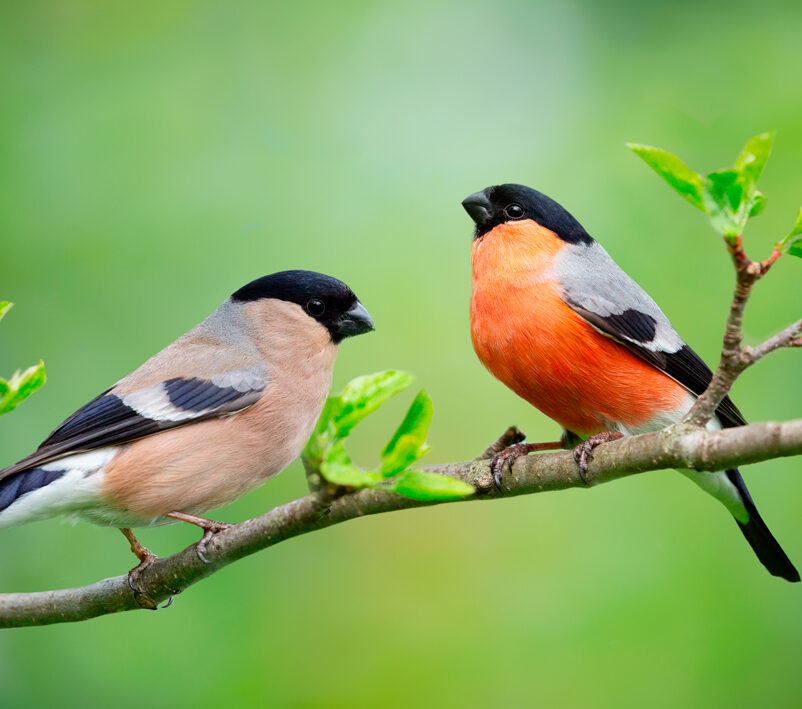
A new study reveals that most “forest” bird species do not respond in the same way to forest structure, suggesting that new approaches are needed to make current European indicators of forest biodiversity more specific.
A study led by the Forest Science and Technology Centre of Catalonia (CTFC) provides new insights into how forest structure (tree size, density, age and distribution) influences bird abundance in forest environments. The research, which analyzed 43 forest bird species across Catalonia, concludes that up to nine species show significant sensitivity to the structure of more developed forests, characterized by large-diameter trees or greater size variability. The remaining species also respond to other forest attributes, but their association is not directly linked to forest maturity, instead relating to overall forest cover or understory characteristics.
This finding arrives at a critical moment: the new Restoration Law requires more precise tools to assess biodiversity in forest and agricultural habitats. Identifying which birds can serve as more specific indicators of forest structure will allow for better measurement of the condition of Mediterranean forests, their evolution, and how future landscape dynamics will affect biodiversity.
The study is based on LiDAR data and national forest inventories, and for the first time models the relationship between bird abundance and forest structure at such a fine scale in Catalonia. This methodological approach offers a new perspective and provides data that will help adapt current European and national indicators at the regional level, as these indicators are often based on species that reflect only the presence or absence of forest cover, but not its structural complexity.
According to Gabriel Miret, CTFC researcher and co-author of the study: “This does not mean that forest-dwelling birds are not good biodiversity indicators, but rather that some only reveal how much forest is present, not whether that forest is more developed or mature and, therefore, potentially of higher quality and biodiversity. We need to move forward in developing more specific and regionally adapted indicators that capture the complex structure we aim to conserve.”
Although the study offers a new perspective on the relationship between birds and forests, the researchers acknowledge that certain limitations remain. The lack of data on elements such as deadwood or understory vegetation—essential for many species—may restrict the ability to detect an even stronger influence of forest maturity. Similarly, excluding rare or highly localized species may leave out components with important indicator value. And while the national-scale analysis is a significant step forward, it may obscure local microhabitats that are crucial for biodiversity.
These limitations have clear implications: “we need to continue developing new forest biodiversity indicators that allow us to assess the two main components of forest change: their abundance and their maturity. This could lead to more effective and regionally tailored restoration strategies that better support biodiversity,” explains Lluís Brotons, also an author of the study. For this reason, the research team highlights the need to advance toward more specific European and national indicator systems adapted to each region.
The study involved researchers from the CTFC, CREAF, the Catalan Ornithological Institute (ICO), the Doñana Biological Station, the Pyrenean Institute of Ecology, and the University of Basel.
More information: Which bird species respond most to forest structural variation? Implications for biodiversity indicators in Mediterranean forests
Last modified: 21 January 2026