


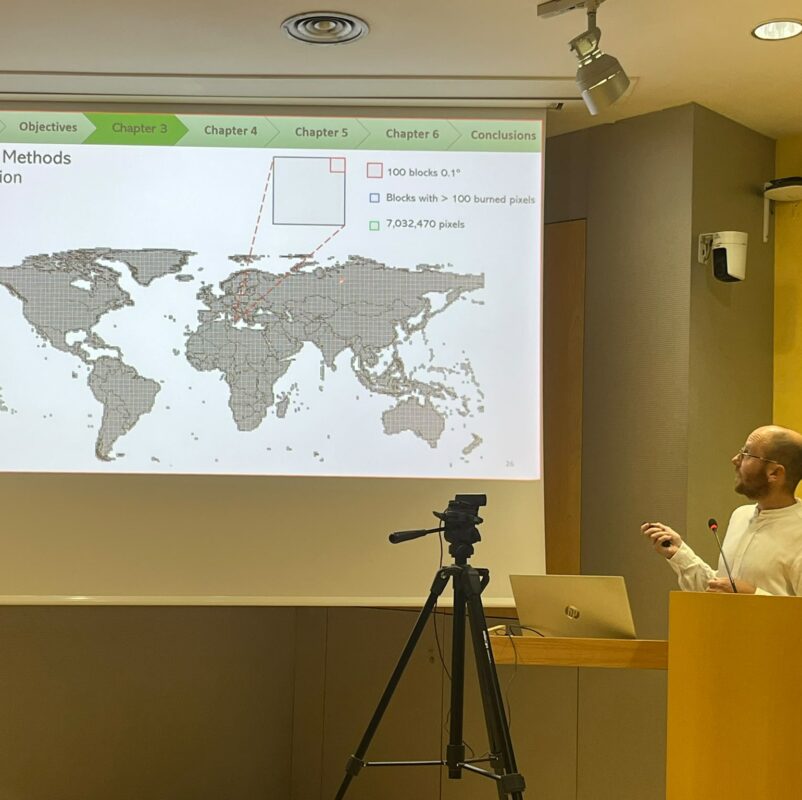
In his doctoral thesis, Miguel Angel Blanco identifies post-fire drought, landscape structure and the diversity of plant communities as key factors in the recovery of Mediterranean ecosystems.
Miguel Angel Blanco, researcher at the Forest Science and Technology Centre of Catalonia, recently defended his doctoral thesis, supervised by Lluís Coll and Aitor Ameztegui, researchers at the Universitat de Lleida affiliated with CTFC. In his research, he explored the mechanisms that determine the recovery of Mediterranean forests after wildfires. By combining remote sensing techniques and fieldwork, the study analyses forest resilience across different ecological scales.
The results show that, at a broad scale, the duration of post-fire drought is one of the most determining factors in vegetation recovery. They also reveal that regeneration rates vary according to the degree of aridity of the territories.
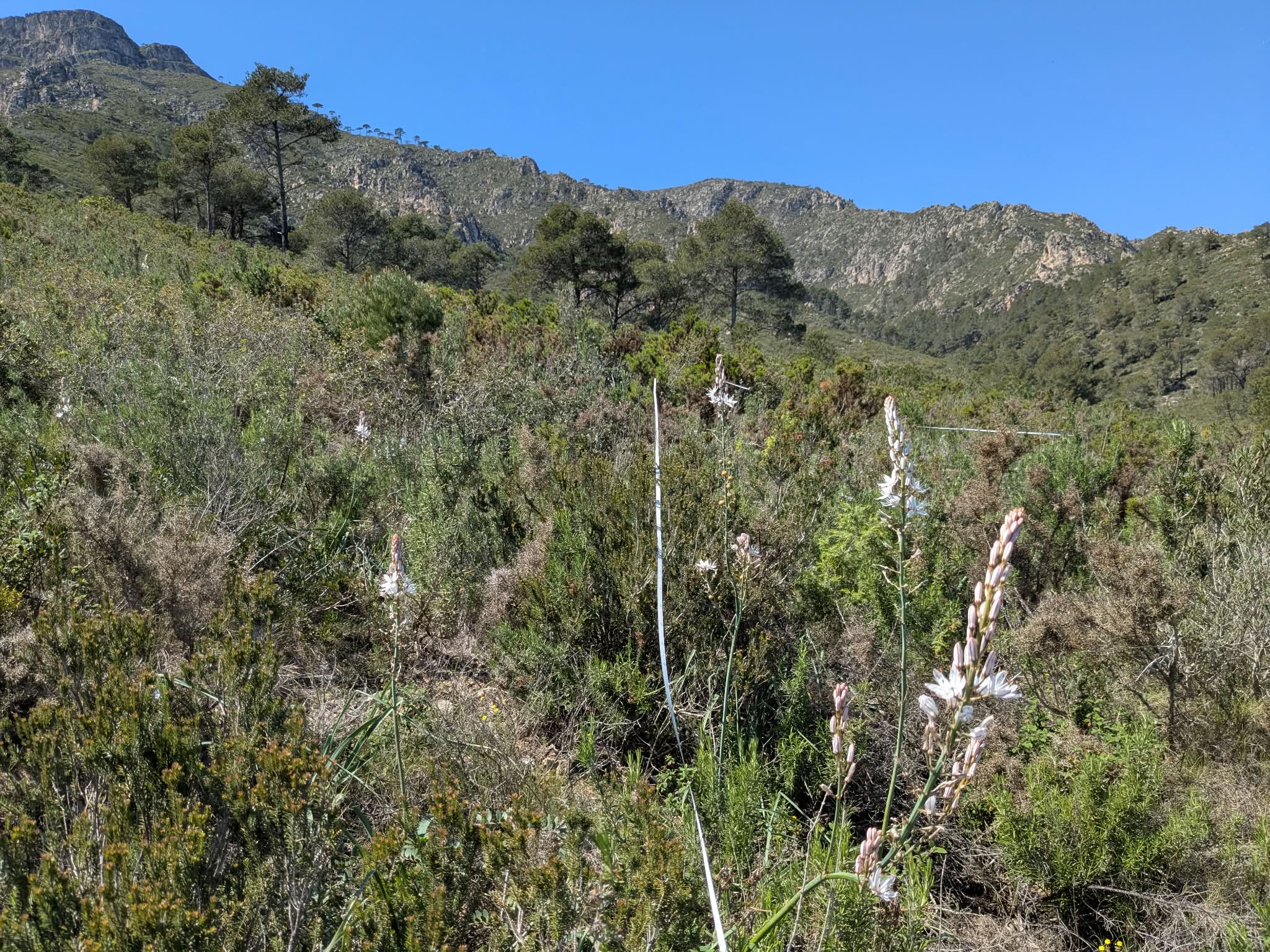
Field plot located in Tarragona and repeatedly burned over the last 40 years
At the landscape scale, the study concludes that fire can increase the heterogeneity of Mediterranean ecosystems, although this effect depends both on fire severity and on the pre-existing characteristics of the landscape.
Regarding plant communities, the research highlights that maintaining diversity and the ability to adapt to new thermal conditions contribute to preserving ecological resilience. This process is particularly supported by the role of herbaceous and shrub species.
The thesis concludes that post-fire forest resilience is not a fixed characteristic, but rather the result of multiple interactions among climate, vegetation, landscape and fire regime. This perspective reinforces the need to promote forest management strategies that integrate this complexity to improve the adaptation of Mediterranean forests under a climate change scenario.
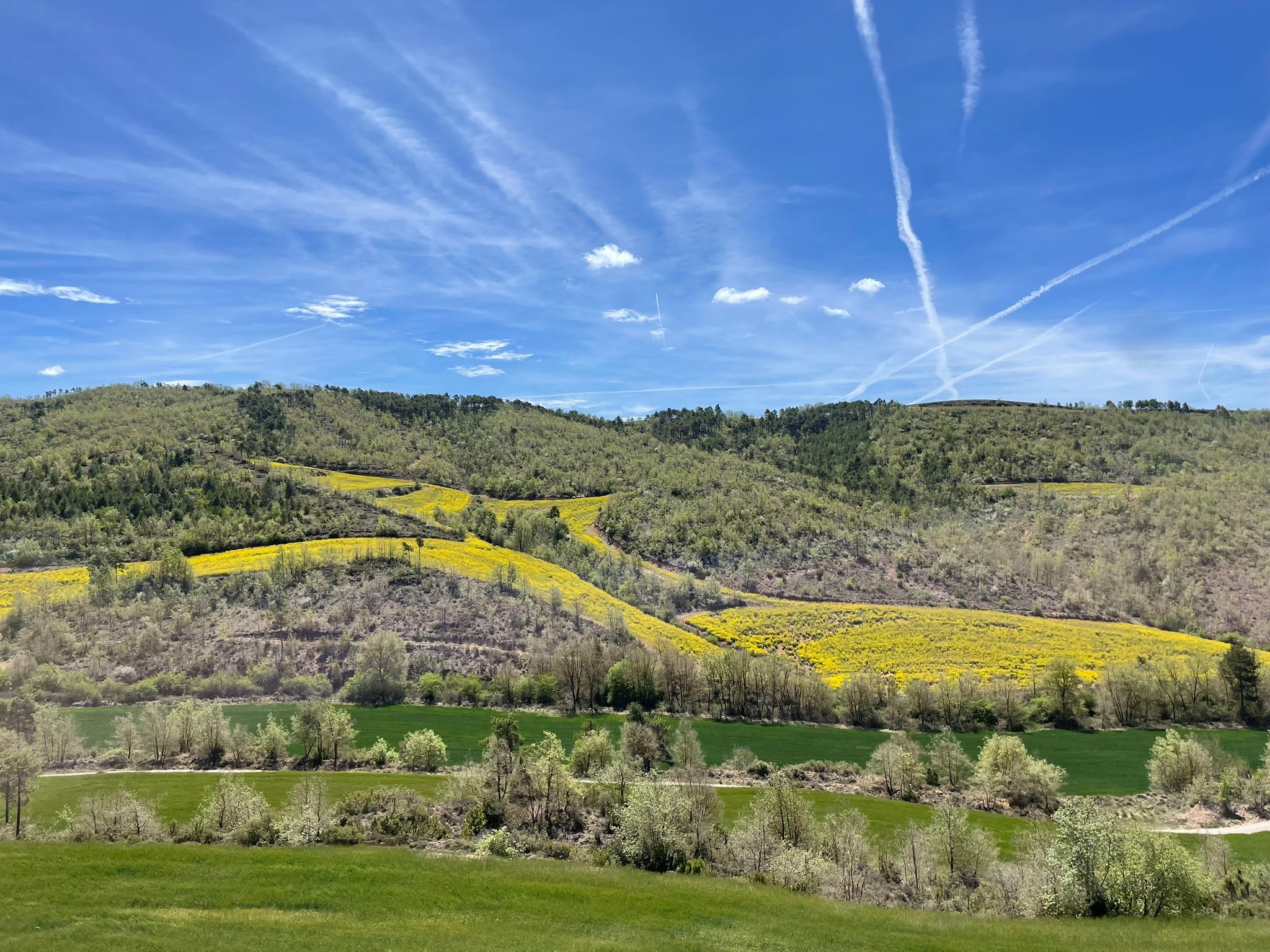
Landscape with high post-fire heterogeneity 25 years after the Solsonès wildfire
Last modified: 30 September 2026