


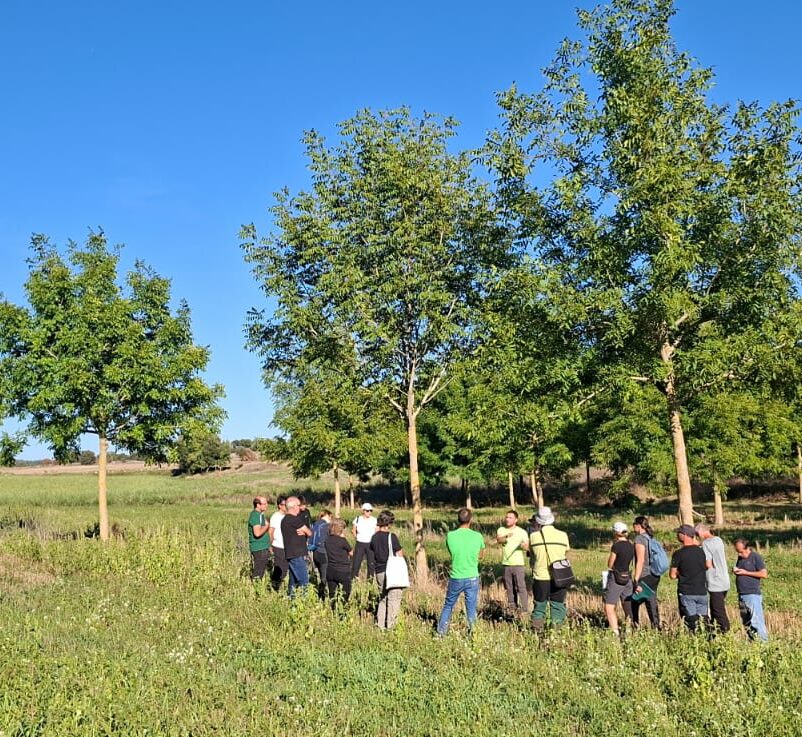
Professionals and experts from the European forestry sector visit leading initiatives in sustainable forest management, agroforestry, and climate change adaptation in Catalonia
On 23 and 24 September, a technical visit dedicated to innovation in forestry and forest and agroforestry restoration was held within the framework of the European INTERREG-SUDOE COOPTREE project. The event brought together forestry professionals, researchers, and managers interested in learning firsthand about innovative experiences that contribute to the resilience of forests and agroforestry systems in the face of challenges arising from climate change.
The visit included representatives from various public administrations, research centres, rural development organisations, companies, and professionals from the forestry and agroforestry sector from Catalonia, Navarre, the Basque Country, Galicia, Andalusia, Extremadura, and France. This diversity of profiles and territories fostered the exchange of experiences and knowledge on sustainable forest management, agroforestry, and climate change adaptation across different contexts in south-western Europe.
Under the coordination of the Forest Science and Technology Centre of Catalonia (CTFC), participants visited several locations across the provinces of Barcelona and Lleida to showcase experiences integrating sustainable forest management, ecological restoration, agroforestry production, and the conservation of natural resources.
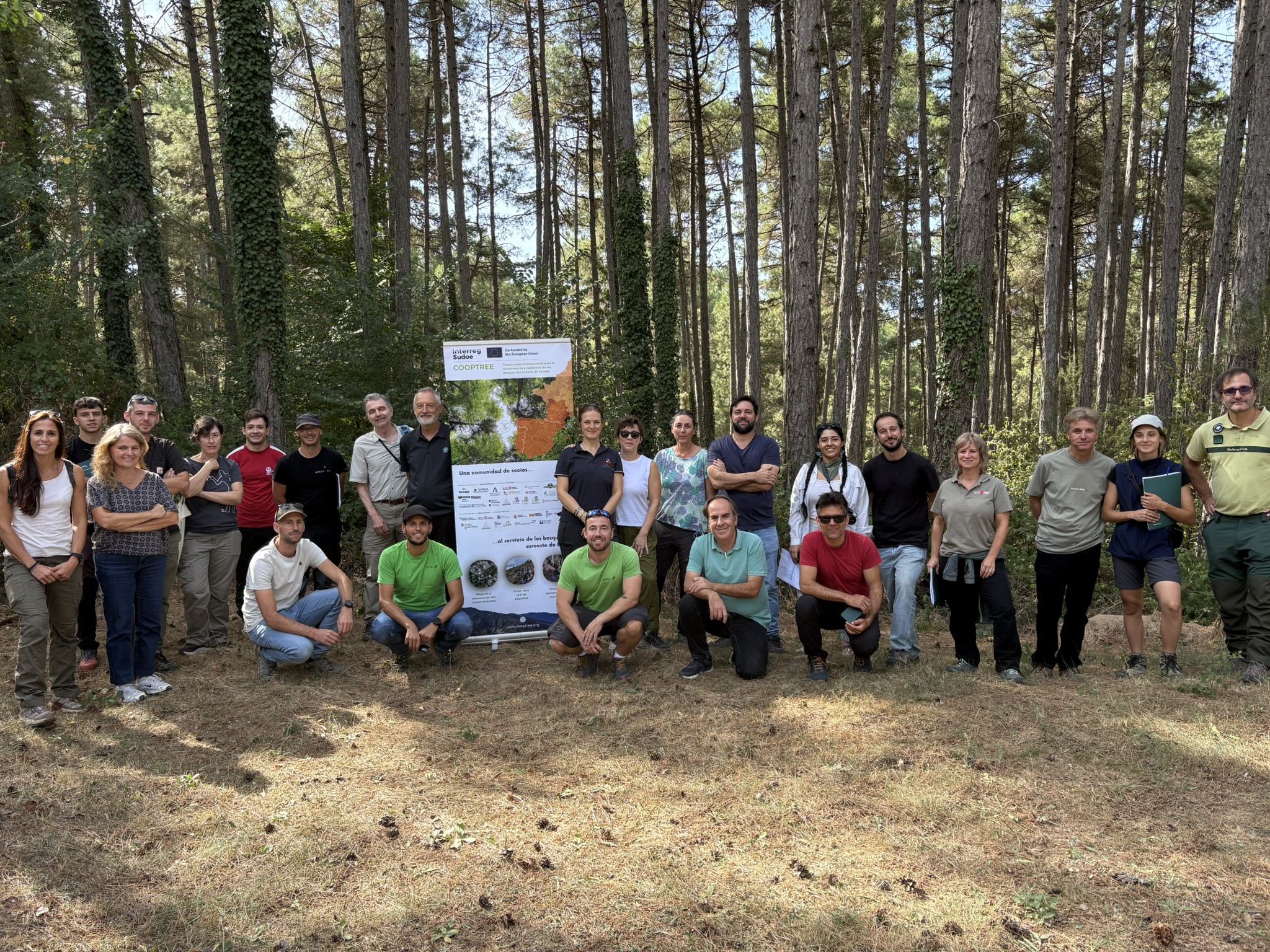
During the first day, participants visited close-to-nature silvicultural treatments developed within the MixForChange project in Montesquiu, where the COOPTREE project has contributed to monitoring the demonstration plots, as well as the silvopastoral demonstration stands promoted by the LIFE AgroForAdapt project in Sora. The day concluded with a visit to a silvoarable agroforestry system combining cereal cultivation with walnut trees intended to produce high-quality timber in the municipality of Sagàs.
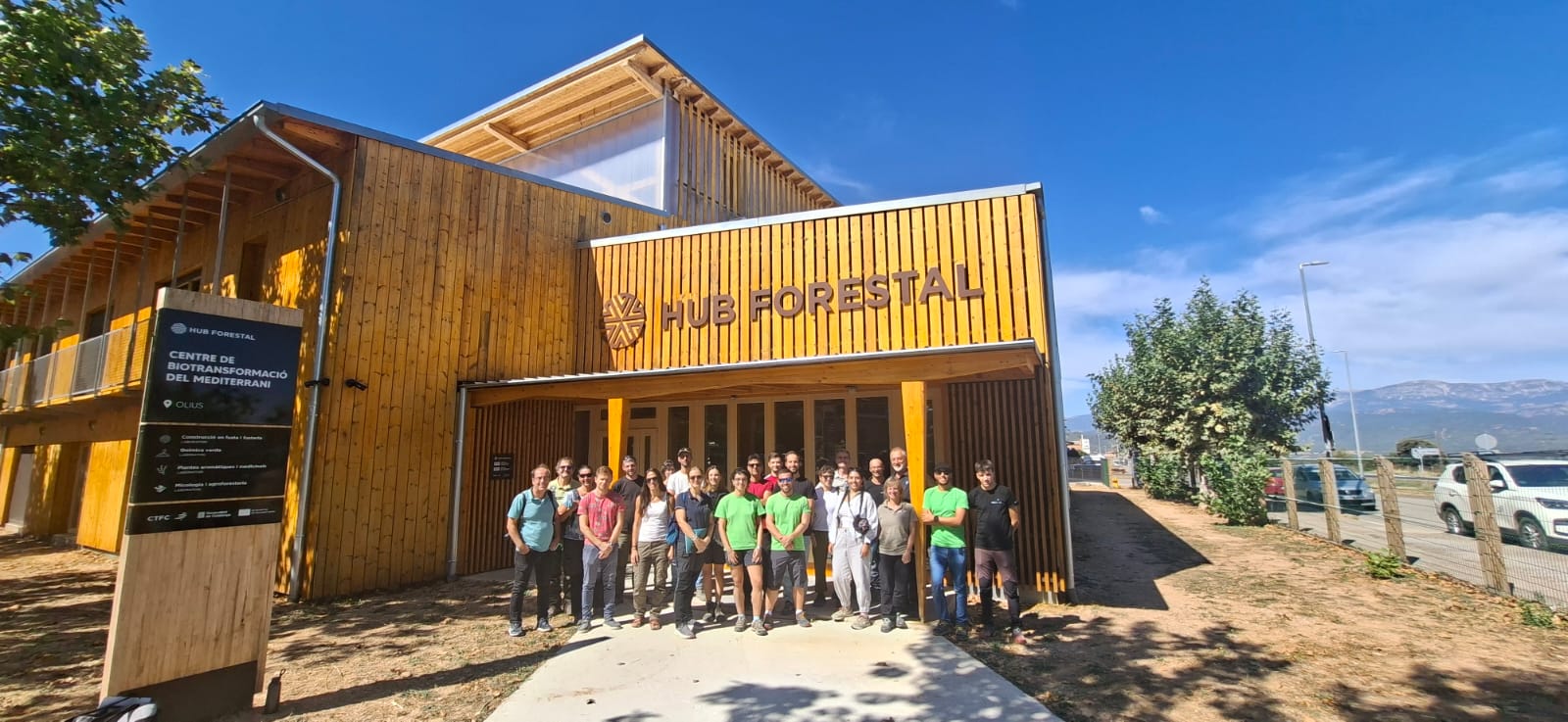
The second day focused on innovative forest management experiences in the counties of Lleida. The programme included a visit to black pine stands managed under the LIFE Pinassa project, a visit to one of the forest marteloscopes in the Solsonès County, where its role as a training and decision-support tool for forest management was highlighted, as well as a guided visit to the Forestry Hub, a reference space for innovation and knowledge transfer to the forestry sector.
Participants also learned about the regenerative agroforestry project Camp d’Auró, an initiative that exemplifies new production models compatible with environmental conservation and ecosystem regeneration.
The event highlighted the importance of exchanging experiences among territories and stakeholders in the forestry sector to address common challenges such as adaptation to climate change, the prevention of large wildfires, and biodiversity conservation. Beyond the technical visits, the activity provided a space for dialogue and networking that fostered synergies and knowledge exchange among professionals from different European regions. Direct exposure to demonstration experiences and innovative initiatives enabled participants to identify good practices that can be transferred to other territories and strengthen cooperation networks across south-western Europe.
This technical visit was part of the objectives of the COOPTREE project to promote knowledge exchange, cooperation between territories, and the transfer of innovative solutions to advance towards more resilient, sustainable forest management adapted to the impacts of climate change.
The INTERREG-SUDOE COOPTREE project (2024-2026) is 75% co-funded by the European Regional Development Fund (ERDF) under the Interreg SUDOE Transnational Territorial Cooperation Programme. The activity also benefited from contributions from the Life programme (LIFE AgroForAdapt, LIFE eCOadapt50) and the PRIMA Scalare project.
Last modified: 30 September 2026