


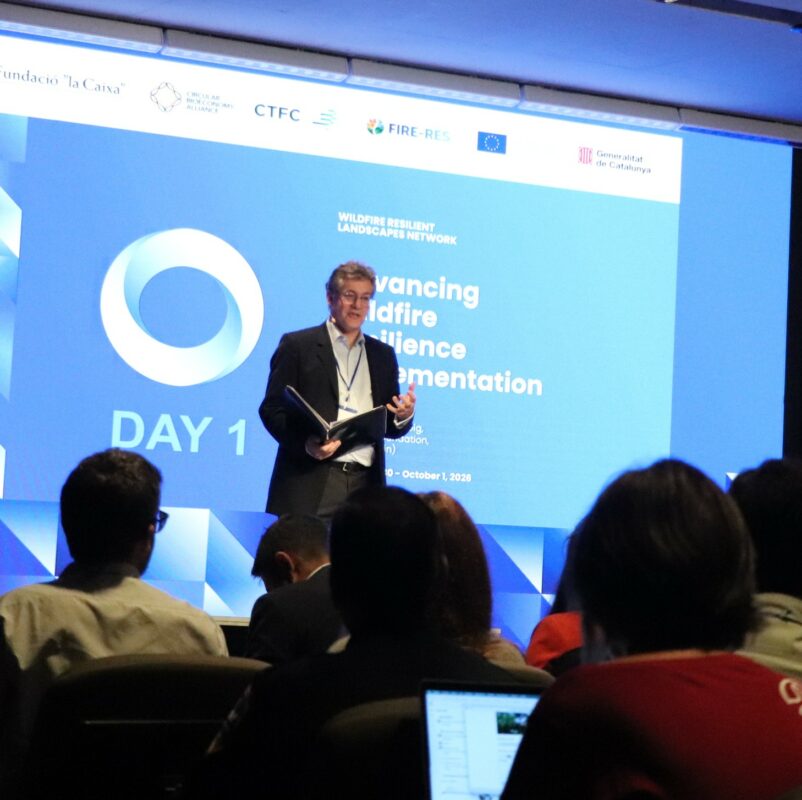
More than 80 representatives from public institutions, research, civil protection, finance, philanthropy, technology and landscape initiatives worldwide met in the Cap Roig Gardens of “la Caixa” Foundation, Spain, to advance an integrated approach to wildfire risk.
Cap Roig, 1 October 2026. More than 80 representatives from public institutions, research organisations, indigenous and local communities, civil protection authorities, financial and philanthropic organisations, technology companies and Living Labs gathered at the Cap Roig Gardens to accelerate the implementation of wildfire-resilient landscapes.
The meeting took place against a backdrop of increasingly intense and destructive wildfires, and focused on a shared ambition: to move from knowledge, demonstration projects and isolated initiatives towards coordinated, large-scale action that makes landscapes, communities and economies more resilient to wildfires. This is much-needed: by mid-September 2026, 666,236 hectares had burned across the European Union, well above the average recorded over the previous two decades.
The international meeting was organised by the Wildfire Resilient Landscapes Network (WRLN) of the Circular Bioeconomy Alliance (CBA) and the FIRE-RES programme, coordinated by the Forest Science and Technology Centre of Catalonia (CTFC). It was hosted by the “la Caixa” Foundation, a custodian member of the CBA.
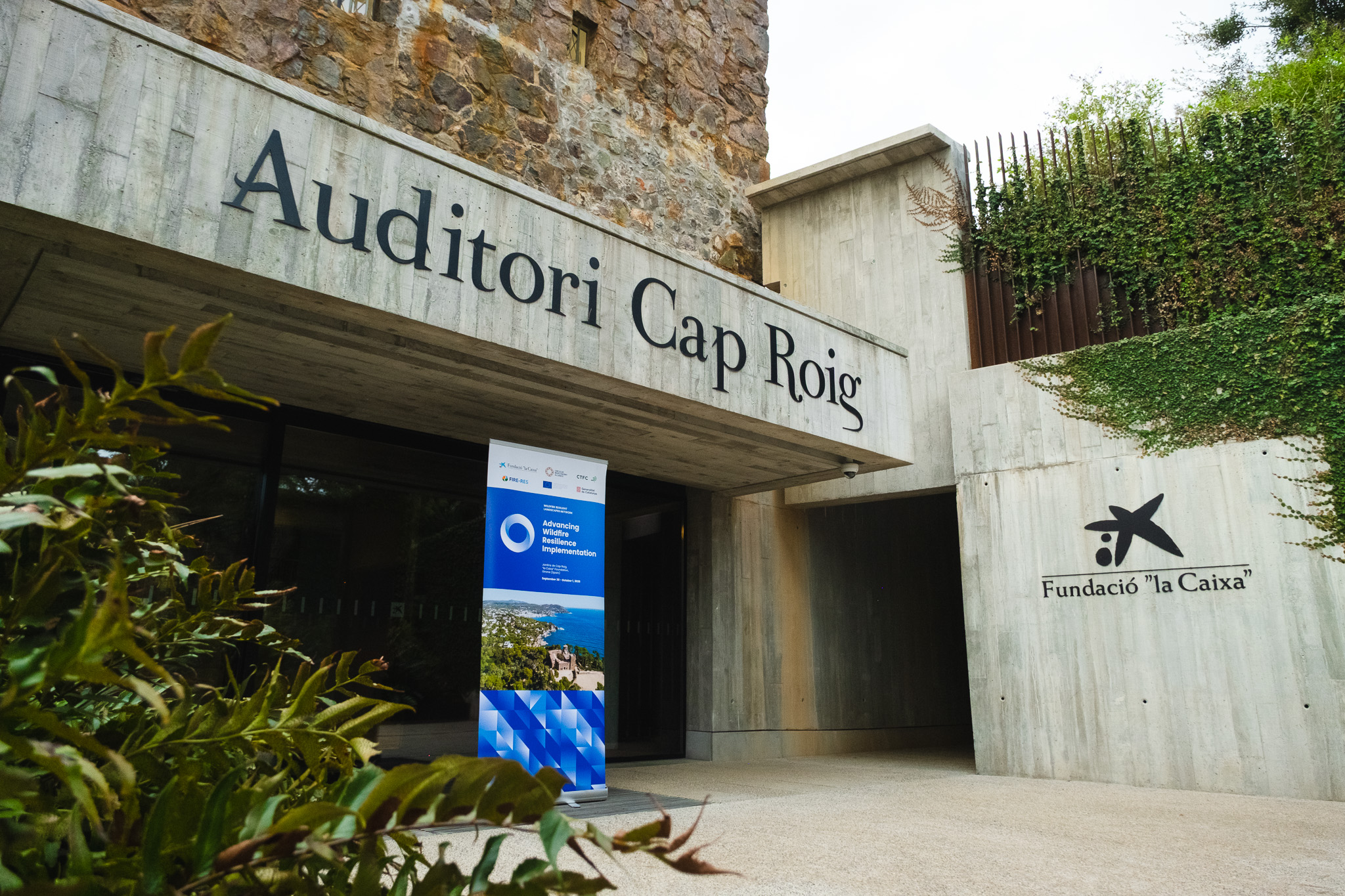
Moving from pilot initiatives to landscape-scale resilience will require “rethinking the economy as we have understood it until now and placing nature at its core”, said Marc Palahí, CEO of the Circular Bioeconomy Alliance.
“Throughthisinternational network, weareadvancingwildfire-resilientlandscapesworldwideandacceleratingthetransitiontowards a neweconomicparadigmthat puts peopleandnaturefirst. A newnature-basedeconomywillhelp us break awayfromourdependencyonfossil fuels andbetteradapt to theuncertainties of climatechange.”
During his remarks, the Secretary-General of the Department of Economy and Finance of the Government of Catalonia, Juli Fernández, emphasised the importance of taking a comprehensive approach to wildfire prevention, combining scientific knowledge, public policy and the involvement of the various stakeholders who operate across the landscape. In this context, he highlighted the role of forest management as a structural, long-term policy, particularly against a backdrop of climate change, increasingly continuous forest cover and the gradual abandonment of agricultural and livestock farming activities. The Secretary-General also stressed the need to move from diagnosis to implementation, strengthen collaboration among public administrations, local authorities, the private sector and the scientific community, and recognise the value of the people who manage the land.
The WRLN provides an international umbrella for this effort, connecting organisations and initiatives from different sectors, including indigenous and local communities, science, public sector, industry and finance. Through its network of Living Labs, partners test solutions in real territories, exchange knowledge, explore investment opportunities and adapt what works to different contexts.
Antoni Trasobares, Director of Wildfire Resilience at the CBA and Director of CTFC, said: “It is time to think big and promote new initiatives that can make a difference in the face of the rapid and impactful changes we are facing nowadays. We need to accelerate the transition to territories where climate resilience is embedded in landscape adaptation, planning, management, governance and investment. This is exactly the approach of the WRLN. The diversity of the organisations and territories represented in this event reflects a shared conviction: no single institution, sector or country can address the growing wildfire challenge alone.”
The meeting highlighted the need for active landscape management, the integration of wildfire risk into policies beyond forestry and civil protection, and stronger coordination across sectors and levels of government. It also emphasised that communities and land managers must play an active role in decision-making. To turn these principles into action, participants explored financing models that combine public funding, insurance, philanthropy and private investment, alongside operational technologies and a connected network of Living Labs. Ambitious project proposals to the EC and other institutions, involving most members of the network in Europe, Chile, North America, Australia, and South Africa, are being developed to consolidate the activity and impact of the network worldwide.
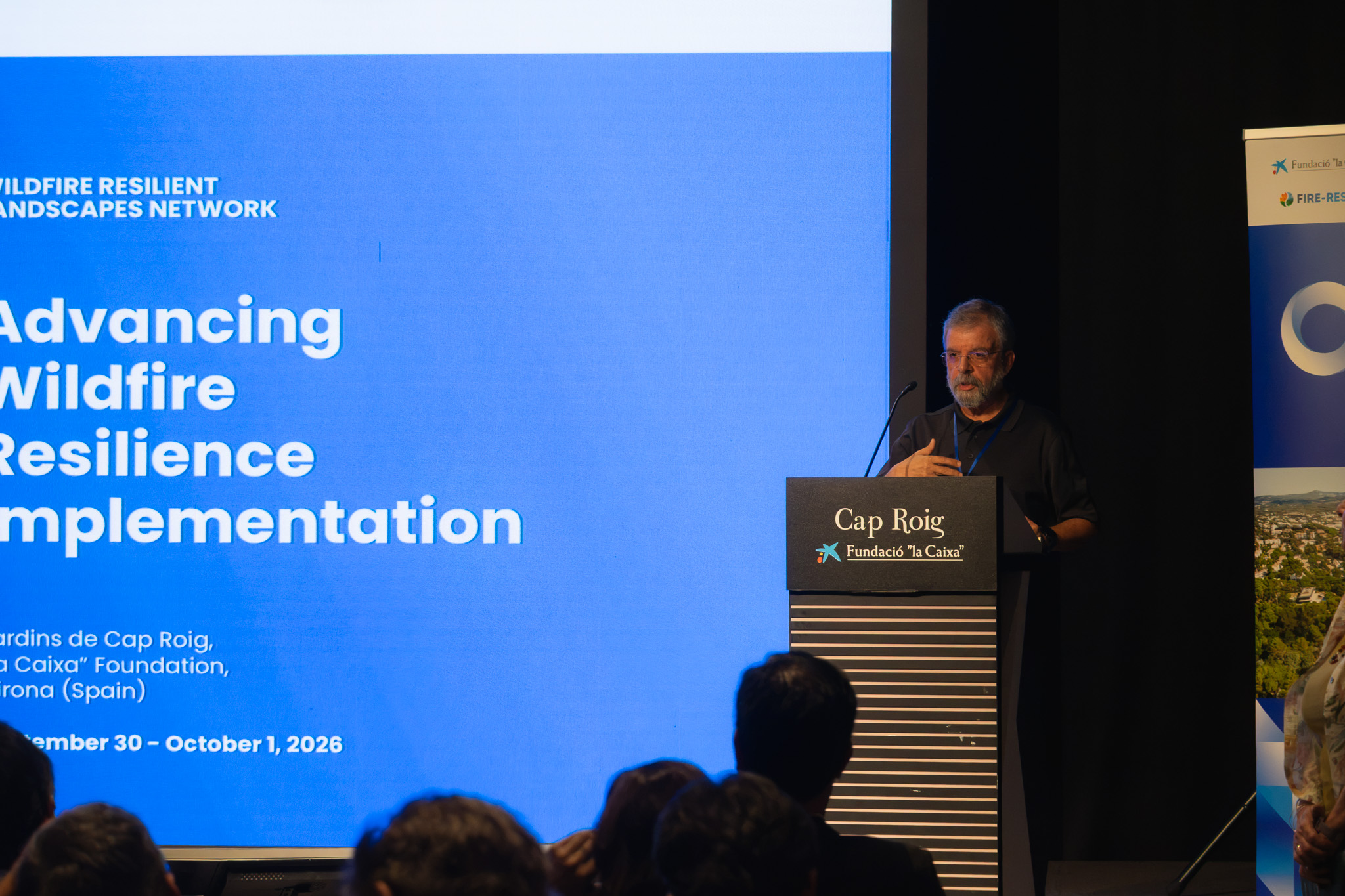
Taking an integrated approach to wildfire risk
Wildfire suppression remains essential, but emergency response alone cannot address the growing scale and complexity of wildfire risk, noted Marc Castellnou, chief inspector of the GRAF, the special wildfire unit of Catalan Fire Service, and an internationally-respected wildfire expert. The European Commission’s Communication on integrated wildfire risk management, adopted on 25 March 2026, calls for a holistic approach connecting prevention, preparedness, response and post-fire recovery, with wildfire resilient landscapes at its core.
The meeting explored how this can work in practice through active land management and multifunctional landscapes that reduce wildfire risk while supporting biodiversity, the provision of water, rural livelihoods and local economies.
Turning knowledge into implementation
Implementing wildfire-resilient landscapes requires coherent action across forestry, agriculture, biodiversity, spatial planning, water management, tourism, public health, civil protection and rural development. The governance discussions explored how policy frameworks, planning tools, institutional coordination and meaningful participation can bring national, regional and local authorities together with the landowners, forest managers and communities whose decisions shape wildfire risk.
Technology can strengthen these decisions at every stage, from risk assessment, early warning and monitoring to prevention, response and post-fire recovery. Participants discussed how rapidly advancing tools, from Earth observation to the modelling of fire and smoke behaviour, are changing what can be anticipated and acted on. Their real value, they noted, lies in combining these tools with scientific evidence and operational expertise so that they meet practical needs on the ground.
The meeting also addressed a key factor: how to secure long-term finance for initiatives working on landscape resilience. Public funding, insurance, philanthropy, private capital and the forest economy are already at work, but not yet at the scale resilient landscapes require. Since many actors share an interest in landscape resilience yet none can secure it alone, the finance session explored new partnerships and mechanisms that could unlock the next step, from philanthropy’s catalytic role to new roles for insurers.
Living Labs: connecting international ambition with local action
The meeting brought together experience from Living Labs and large-scale demonstration initiatives across Europe, North and South America, Australia and Africa.
Living Labs are settings where public authorities, researchers, communities, landowners and businesses jointly design, test and evaluate solutions under real conditions. Connecting them through the WRLN turns local experience into shared learning that can be adapted across different landscapes, build evidence and support wider adoption.
From discussion to territorial reality
As part of the programme, participants visited the area affected by the 2026 Les Gavarres wildfire in Catalonia. The fire, which broke out near La Bisbal d’Empordà in early July, affected approximately 2,200 hectares, mainly forest land. Around 97% of the affected area lies within the protected natural area of Les Gavarres.
During the visit, emergency services, forest owners and local stakeholders described the damage caused by the fire, the operational demands of the emergency, the coordination required between institutions, and the difficulties of post-fire recovery and land management.
Participants concluded that resilience to large wildfires does not depend on any single actor, but rather on coordinated and sustained action before, during and after an emergency.
A growing human, environmental and economic challenge
Wildfires also have far-reaching consequences for people and communities. Between 2008 and 2023, they displaced approximately 590,000 people in the European Union, while damage to property and infrastructure is estimated at around €2.5 billion per year. Smoke and deteriorating air quality can also increase respiratory and cardiovascular health risks, including in areas far from the fires themselves.
Building resilient landscapes therefore means not only reducing wildfire risk, but also protecting people, public health, rural livelihoods, water resources, soils, biodiversity, infrastructure and local economies.
About the Wildfire Resilient Landscapes Network
The Wildfire Resilient Landscapes Network (WRLN) is an initiative of the Circular Bioeconomy Alliance (CBA) that brings together international organisations and landscape initiatives with a shared ambition: to make wildfire-resilient landscapes a reality.
The network connects governance, finance, science, technology, local and Indigenous knowledge, and practical landscape management. Its international network of Living Labs supports large-scale demonstrations, knowledge exchange, public-private collaboration and the replication of effective solutions across different territories.
About the Circular Bioeconomy Alliance
The Circular Bioeconomy Alliance was established in 2020 by His Majesty King Charles III as The Prince of Wales and is a registered charity. The CBA aims to accelerate the change to a nature-first economy that is climate neutral, inclusive and powers prosperity. We create impact at scale, using natural capital to build sustainable value chains which transform our land, food, health and industrial systems. Our approach combines a science-based framework, coalitions of expert partners, indigenous and local leaders, and a global network of ‘Living Labs’.
About the FIRE-RES Programme
Coordinated by the Forest Science and Technology Centre of Catalonia (CTFC), the FIRE-RES International Programme is a global platform that builds on the legacy of the European Horizon 2020 FIRE-RES project. The programme promotes international cooperation, innovation and knowledge exchange to accelerate the development of wildfire-resilient landscapes and communities.
About the Forest Science and Technology Centre of Catalonia (CTFC)
The Forest Science and Technology Centre of Catalonia (CTFC) is a public research institution specialising in forest ecosystems, integrated wildfire risk management and resilient landscapes. With over 30 years of experience, CTFC is a leading centre for research and innovation in Mediterranean landscapes, working at the interface of science, policy and practice to develop and implement solutions for climate adaptation and wildfire resilience. CTFC serves as the coordinator of the FIRE-RES Programme and is a member of the CBA.
About “la Caixa” Foundation
The ”la Caixa” Foundation has been a custodian member of the CBA since 2025 and a driving force behind the WRLN since 2026. Environmental sustainability is one of the Foundation’s main cross-cutting priorities across all areas of its work, alongside addressing the effects of environmental challenges on people in vulnerable situations. By joining the CBA and supporting the WRLN, the ”la Caixa” Foundation is reinforcing its commitment to advancing environmental sustainability and transforming the environmental future of the Mediterranean region and its communities.
In 2026, the ”la Caixa” Foundation has a record budget of €710 million, representing an increase of 8.4% compared with the previous year. Nearly 60% of this investment, amounting to more than €415 million, is allocated to programmes that promote social transformation.
Last modified: 2 October 2026