


The POCTEFA REDBIO project promotes shared solutions for managing forests, open habitats, and peatlands in a changing world
The Pyrenees are one of the major biodiversity hotspots in southern Europe, but also a territory where intensive human activities —livestock grazing, agriculture, forestry— coexist with ecosystems of high ecological value. In a context of climate change and shifting socioeconomic dynamics, balancing conservation with human use has become an urgent challenge. This is the purpose of POCTEFA REDBIO, a cross‑border project that will run until 2026 to develop shared solutions for three key habitat types: forests, open habitats, and peatlands. In Catalonia, the project focuses on four protected areas in the Pyrenees: Aigüestortes, Alt Pirineu, Cadí‑Moixeró, and Capçaleres del Ter i del Freser.
Identifying high‑ecological‑value forests and strengthening open‑habitat management
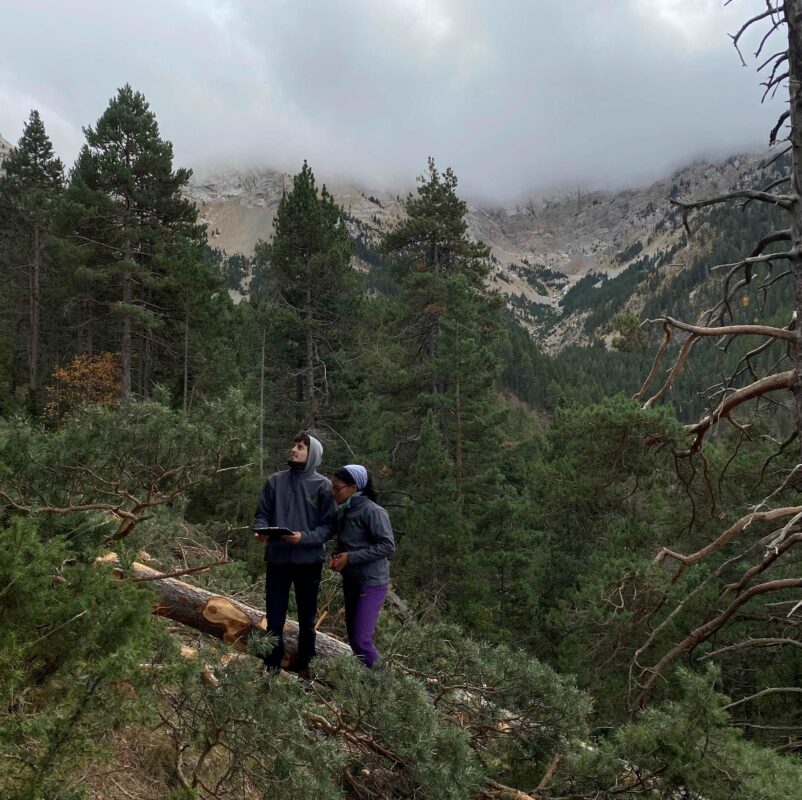
The CTFC contributes to the project through two complementary research lines. First, the Forest Ecosystem Conservation group is working to identify high‑ecological‑value forests (BAVE) and improve their mature traits—stands that stand out for their biodiversity, maturity, ecological functioning, or cultural value. To locate them, researchers combined LiDAR data, existing cartography, and expert knowledge of the territory. This was followed by detailed photo‑interpretation and field surveys to verify maturity attributes and refine boundaries. The most relevant stands were inventoried using the RedBosques protocol, which allows to evaluate a forest’s maturity from its structure.
Preliminary results show extensive progress: 112 BAVE stands have been identified in Aigüestortes (55 surveyed), 49 in Alt Pirineu (18 surveyed), 40 in Cadí‑Moixeró (13 surveyed), and 14 in Capçaleres del Ter i del Freser (4 surveyed). These data will be essential for guiding future conservation and ecological‑connectivity strategies.
Meanwhile, the Silvopastoral Ecology and Management group has mapped the grazing potential of the protected areas and identified traditional agro‑pastoral practices that remain active, along with the challenges they face. This knowledge is crucial for strengthening the management of open habitats, a key component of Pyrenean biodiversity.
Last modified: 18 February 2026