


How to guarantee the traceability of a log when extreme environmental conditions put technology to the test?
In the forestry sector, the loss of information regarding the origin and quality of timber during transport and drying has historically been one of the main bottlenecks in the value chain. The European project SINTETIC has taken a decisive step toward resolving this challenge through a pilot test certifying the reliability and traceability of timber in real-world environments.
The trial was conducted through a collaboration between technological partner Arboreal, Radio Frequency Identification (RFID) traceability solutions manufacturer Simtrona and sawmill industry Fustes Jané. The goal: to evaluate the capability of digital systems to uniquely identify each log after an extended period of outdoor natural drying.
Robust technology against weather conditions: The key role of Simtrona’s RFID
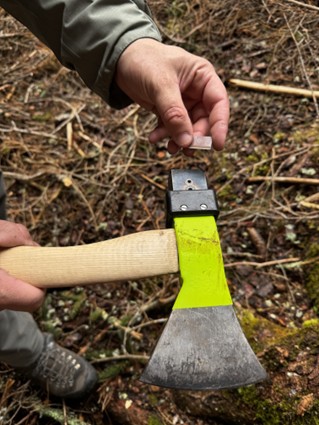
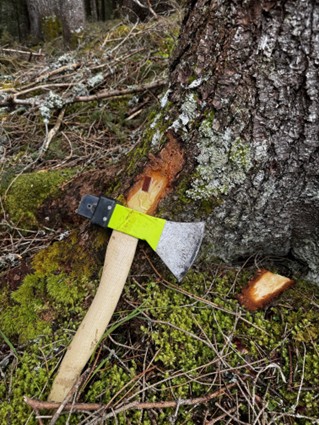
One of the key distinguishing features of the test was the physical identification method. Unlike conventional tagging systems or surface markings—which are easily degraded by sun, humidity, or lost during their transport—, Simtrona has implemented a proprietary Radio Frequency Identification (RFID) technology. The device is inserted directly inside the log using an adapted axe insertion mechanism. This integration ensures that the chip remains protected by the wood itself, shielding the transmitter’s integrity against breakage, drying cracks, or rough handling in the log yard.
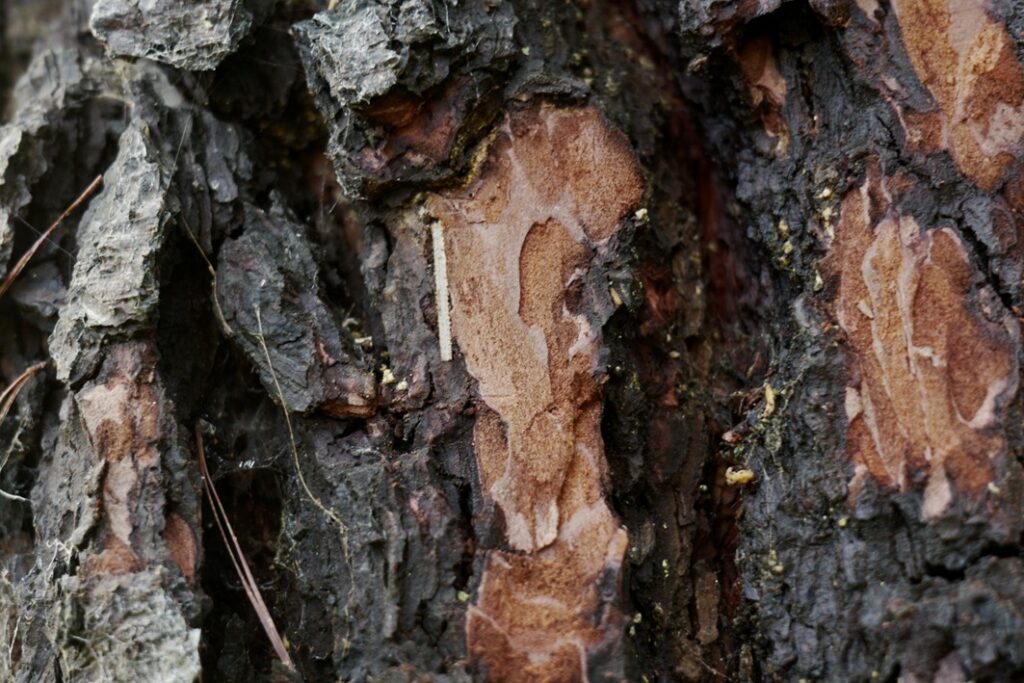
Detail of a log’s bark showing the RFID device inserted inside the wood. This method protects the chip against harsh weather conditions, moisture, and wear.
Results: 100% accuracy in validated identifications
Combining this physical protection with Arboreal’s recognition algorithms has yielded conclusive data:
-
87.3% overall correct identification rate (recognition of 48 out of 55 logs exposed to weather conditions for months).
-
100% accuracy in validated identifications, confirming that the technology produces no false positives and that any issue is exclusively attributable to image quality, not device or software failure.
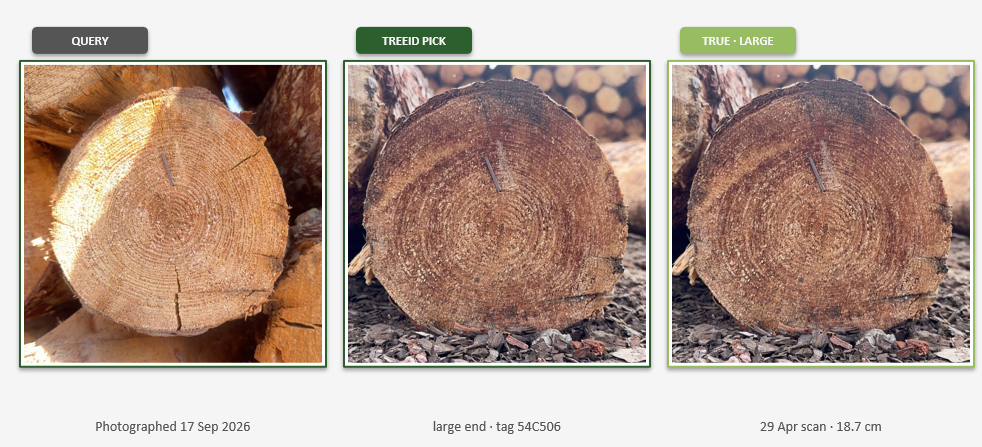
Example result of TreeID for log traceability
These results validate that the system maintains an immutable digital identity from harvesting to initial industrial processing.
“Digitalizing the forestry sector is not merely a matter of operational efficiency, but of data sovereignty and transparency. Traceability reliability is the only guarantee to certify the legal origin of timber, strictly comply with the new European Deforestation Regulation (EUDR) and maximize the added value of every tree harvested from our forests. If the data flow breaks, the system fails; SINTETIC proves that we can keep information integrity intact under real-world conditions.”
Antonio Ruano, Researcher for the SINTETIC project at the Forest Science and Technology Centre of Catalonia (CTFC).
A qualitative leap toward the European circular bioeconomy
This pilot represents a practical milestone for SINTETIC in validating a centralized data model to enhance traceability across the European timber value chain. By securing the link between the physical resource and its digital identity, the supply chain gains transparency, sawmilling optimization, and legal certainty against illegal logging.
Discover the process:
-
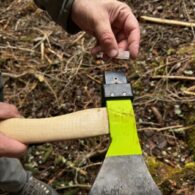
- Detall de la col·locació manual d’un xip RFID al suport d’inserció de la destral especialitzada abans de procedir al marcatge del tronc.
-
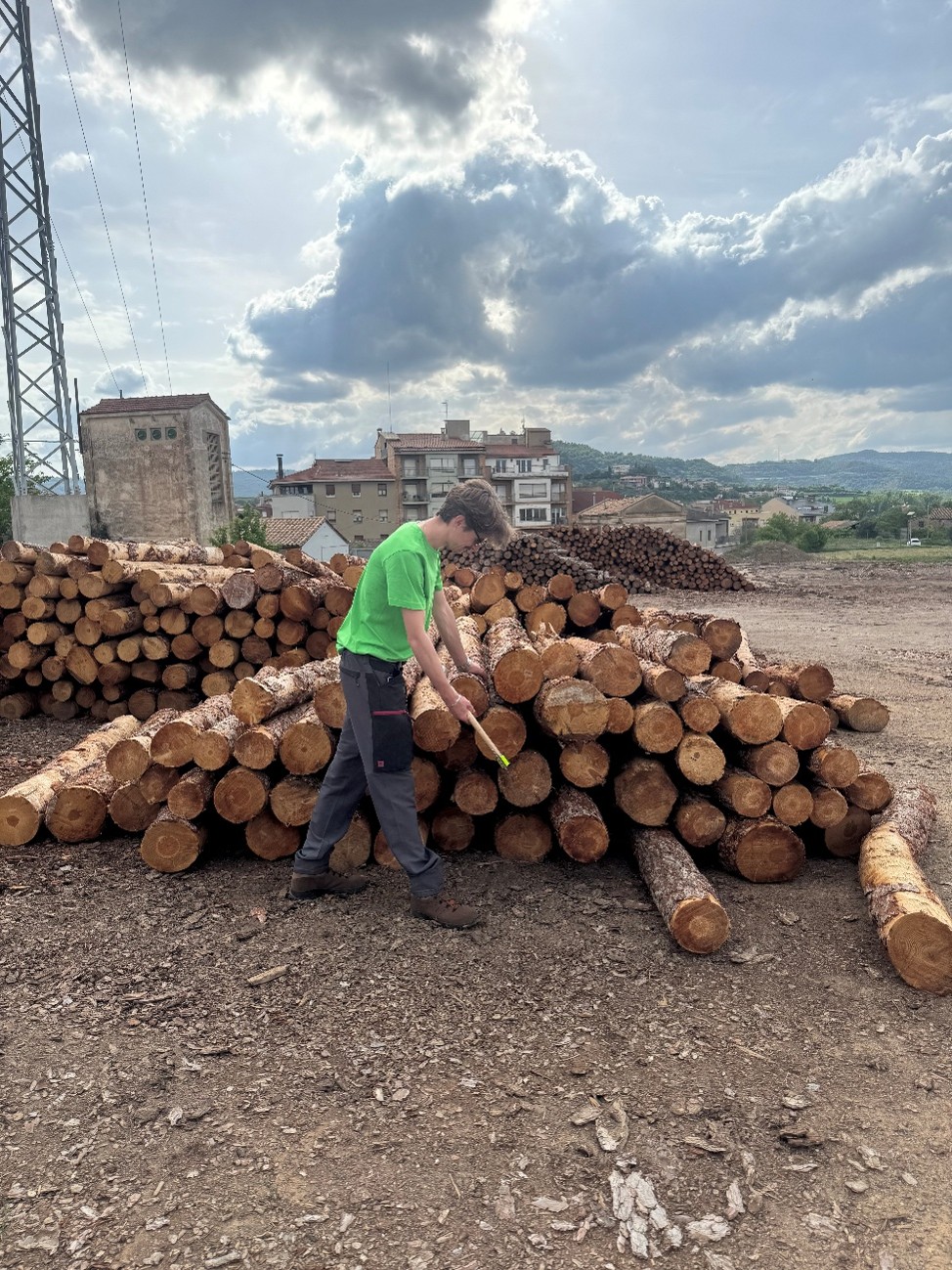
- Una destral adaptada amb un mecanisme d’inserció recolzada a la base d’un arbre. Aquesta eina s’utilitza per introduir de forma ràpida i precisa els xips de radiofreqüència (RFID) de Simtrona a la fusta.
-

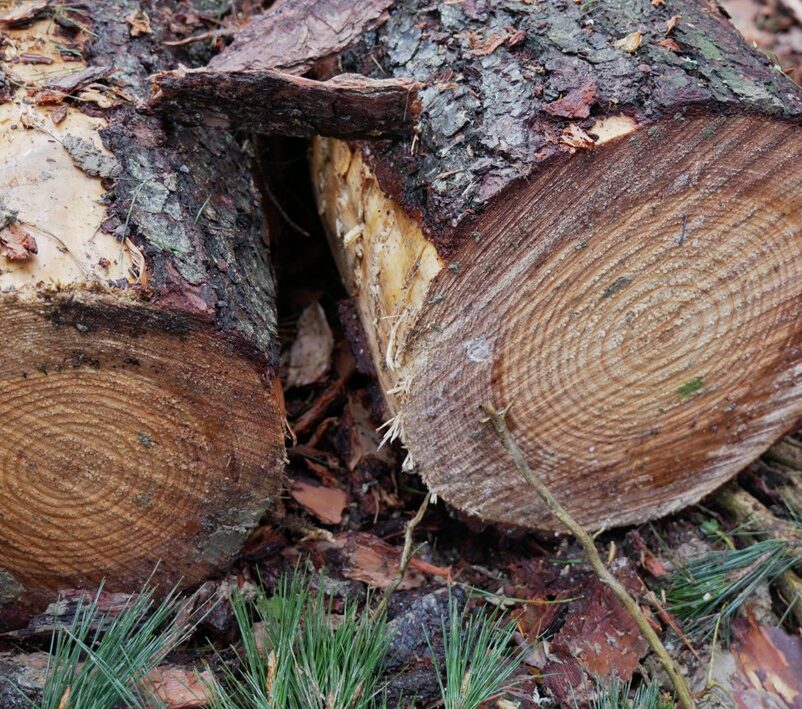
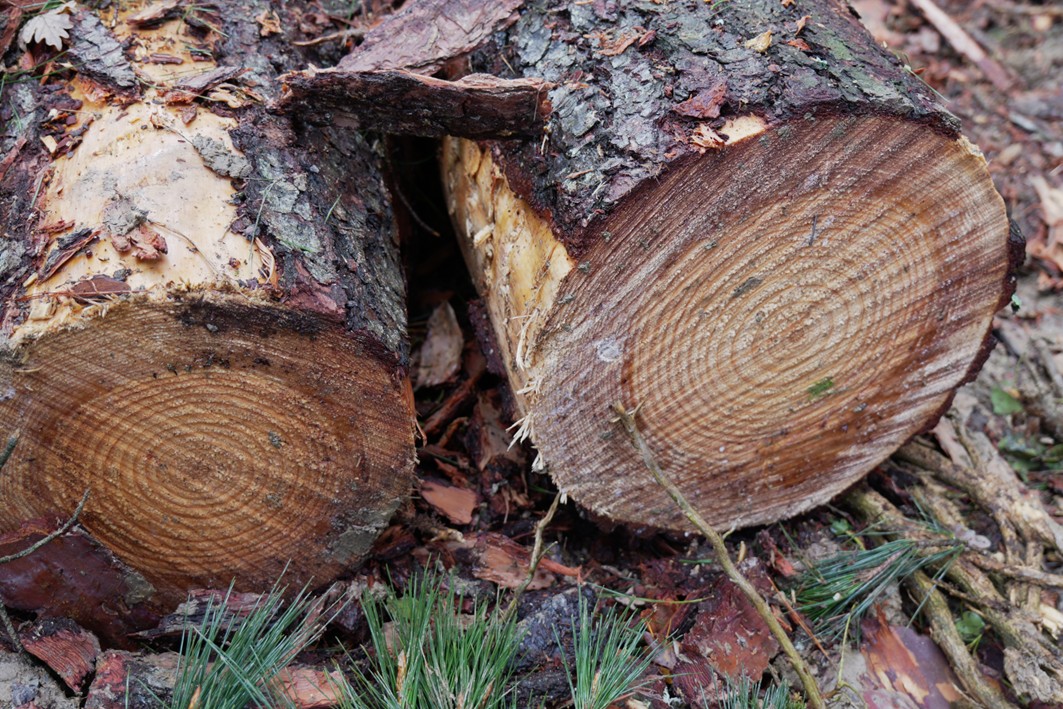
- Vista detallada de la secció transversal de dos troncs tallats, on es mostren els anells de creixement de la fusta sotmesa a la prova de traçabilitat.
-
- Un operari de la serradora Fustes Jané utilitza la destral d’inserció per marcar els troncs al parc de fusta durant les proves pilot del projecte SINTETIC.
-
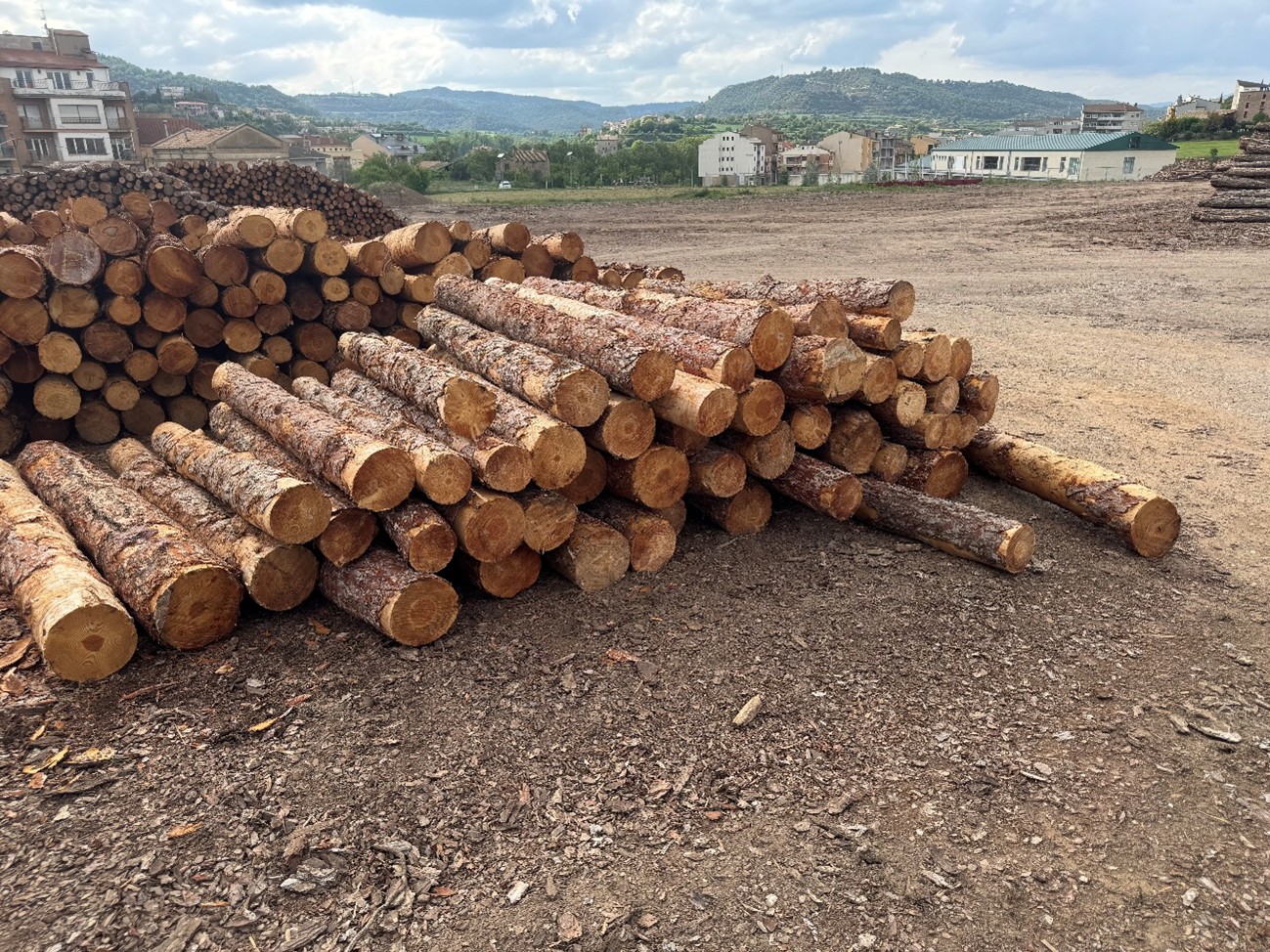
- Piles de troncs emmagatzemats a l’aire lliure a les instal·lacions de Fustes Jané per avaluar el procés d’assecat natural i la resistència dels sistemes d’identificació digital a la intempèrie.
Last modified: 13 October 2026