


In an article published this week in The New York Times, CTFC researchers discussed the Fire Wine and Fire Product labels in wildfire prevention.
The labels recognize wineries and agri-food companies that contribute, through their activity or location, to the creation of a resilient landscape.
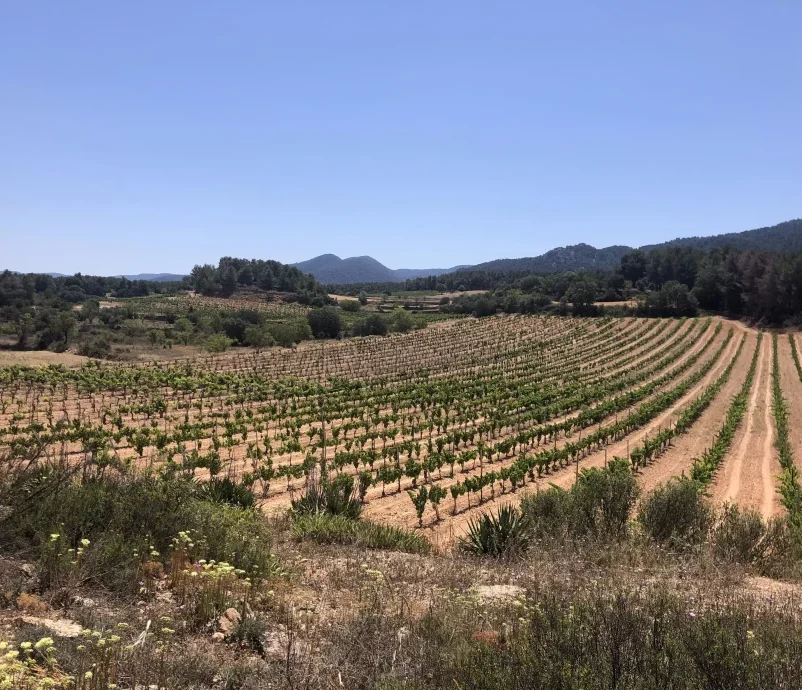
Wildfires are becoming increasingly frequent and devastating in Europe. The 2025 fire season was the worst recorded in the European Union, with more than one million hectares burned—an area roughly equivalent to that of Cyprus—according to data from the Joint Research Centre. Against this backdrop, the discontinuity of forest cover, with vineyards, truffle plantations, and apiaries, is a key tool for preventing and slowing the spread of fire. Together, these practices help build a mosaic landscape that is more resilient to climate change and large wildfires.
Building on this idea, researchers from the Forest Science and Technology Centre of Catalonia have promoted the Fire Wine and Fire Product labels, which recognise initiatives that help reduce wildfire risk. Eight vineyards already have the Fire Wine label, and CTFC is processing 30 more accreditations. An exemplary case is Celler Abadal, in the Bages region, the first winery in Europe to incorporate the Fire Wine label, where a fire in 2017 was stopped upon reaching the vineyards.
In statements to the article published in The New York Times, Elena Górriz Mifsud, researcher at the CTFC and promoter of the initiative, states that the label recognises what companies are doing well, and that it is an added value for consumers. “We are not only producing wine”, she explained. “We produce security.” Beyond being a marketing tool, it is a wildfire risk prevention model that could be replicated in other European regions.
Furthermore, activities such as truffle production promote active forest management, keeping forests better managed and less vulnerable to fire.“It’s something that happens naturally: the elimination of vegetation from the ground because the fungus around the tree acts as a natural herbicide,” Juan Martínez de Aragón explained. “They are like islands scattered throughout the forest.”
Last modified: 29 May 2026