


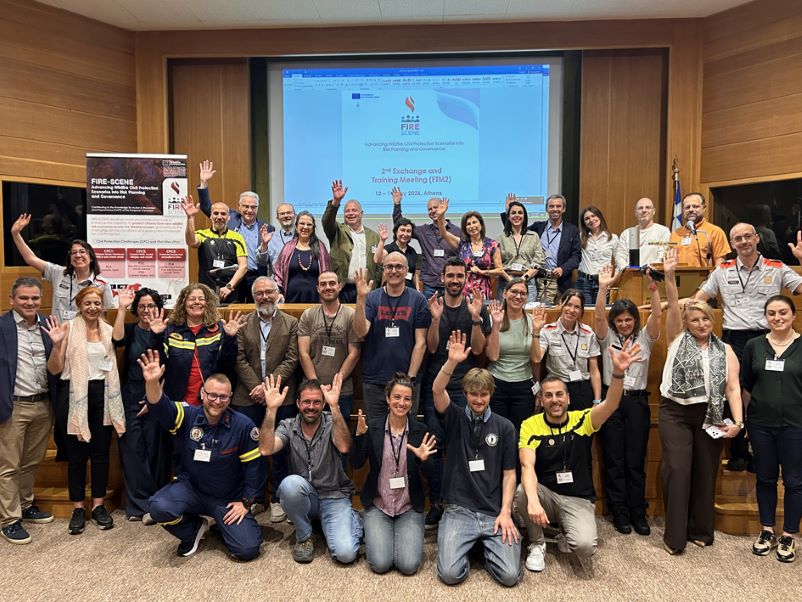
20FIRE-SCENE’s ETM2 gathered European experts in Athens to exchange and train on wildfire risk assessment and planning in coastal WUI and tourist areas.
The 2nd Exchange and Training Meeting (ETM2) of the FIRE-SCENE project took place from 12 to 14 May in Athens (Greece). Organised by the Aristotle University of Thessaloniki, the event brought together public authorities and emergency services, land-use and sectoral management practitioners, and representatives from research and civil society to strengthen knowledge and skills in wildfire risk management for Mediterranean contexts.
Funded by the European Union, FIRE-SCENE is a two-year project led by the Forest Science and Technology Centre of Catalonia that aims to improve prevention, preparedness, and governance for emerging wildfire risk scenarios across the Mediterranean. As part of this effort, ETMs play a central role in promoting cross-sectoral learning. The first ETM (ETM1), held in Catalonia in 2025, highlighted the value of combining expert dialogue with field-based learning, enabling stakeholders to analyse real wildfire events, strengthen cross-country collaboration, and identify practices transferable to other high-risk territories.
Building on this experience, ETM2 focused on wildfire risk in coastal Wildland-Urban Interfaces (WUIs) and tourist areas, where seasonal population changes and evacuation constraints increase exposure and operational complexity. The meeting convened EU, national and regional authorities alongside civil protection and fire services, local administrations, researchers, NGOs, tourism stakeholders and European projects, fostering dialogue between policy, science and operational practice.
ETM2 demonstrated the importance of connecting lessons learned, operational practices and innovative solutions to address increasingly complex wildfire risk scenarios in Mediterranean regions. The exchange between territories allows to jointly address common challenges, but also practical solutions and advanced governance approaches that can be adapted and transferred across Europe. – Eduard Plana (Forest Science and Technology Centre of Catalonia), FIRE-SCENE Project Coordinator.
The indoor sessions, held in Athens on 12 and 14 May, combined expert presentations, peer exchange and round-table discussions on wildfire risk assessment, prevention, preparedness and governance, with a strong emphasis on sharing experiences and transferable practices across Mediterranean regions to cope with the growing risk of Extreme Wildfire Events (EWEs).
A dedicated session presented the Wildfire Peer Review Assessment Framework (WPRAF), already implemented in several EU territories, as a key governance tool for strengthening national and regional capacities. This discussion was framed within the FIRE-SCENE approach, which supports the development of end-user–oriented risk assessment and planning tools and integrated risk governance. It is aligned with the EU Preparedness Union Strategy and the recently launched EU strategy on wildfire risk management, promoting a whole-of-government and all-of-society approach.
The WPRAF is a pivotal instrument within the mosaic of fire governance and management frameworks, speaking directly to practitioners who increasingly face the need for broader perspectives and stakeholder engagement in landscape fire management. Frameworks like the WPRAF offer multiple entry and exit points, requiring practical applications to show their true value, which projects like FIRE-SCENE and events like ETM2 provide, connecting and empowering people to take new ideas back home, creating more demanding communities and a more agile European move towards fire management. – João Verde (Agency for Integrated Rural Fire Management, AGIF), ETM2 participant.
An additional interactive workshop, “Insights towards an enhanced risk governance framework”, focused on key dimensions for strengthening wildfire risk governance across Europe. The workshop explored how to improve policy coherence and synergies between sectors and governance levels, promote inclusive participation and co-creation processes, and reinforce institutional coordination and funding mechanisms for wildfire risk management. Through facilitated discussions, participants contributed practical insights and governance perspectives from different Mediterranean contexts. The outcomes collected during the workshop will feed into FIRE-SCENE’s upcoming deliverable D2.2 “Policy brief on governance models for wildfire risk management and Civil Protection.”
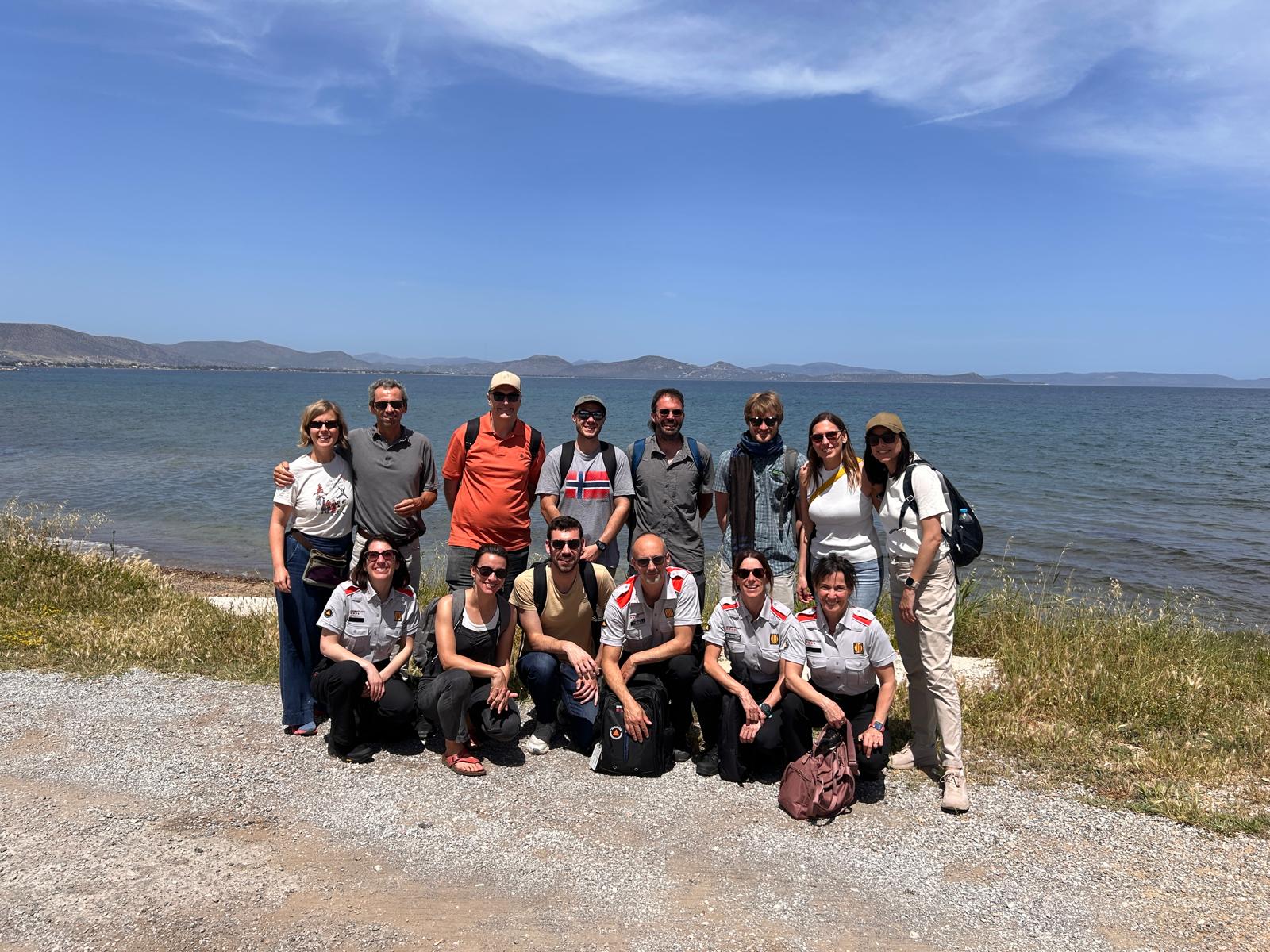
A field visit in the Attica region on 13 May allowed participants to explore wildfire-affected WUI areas, linking on-the-ground observations with challenges related to effective prevention, societal preparedness and emergency management.
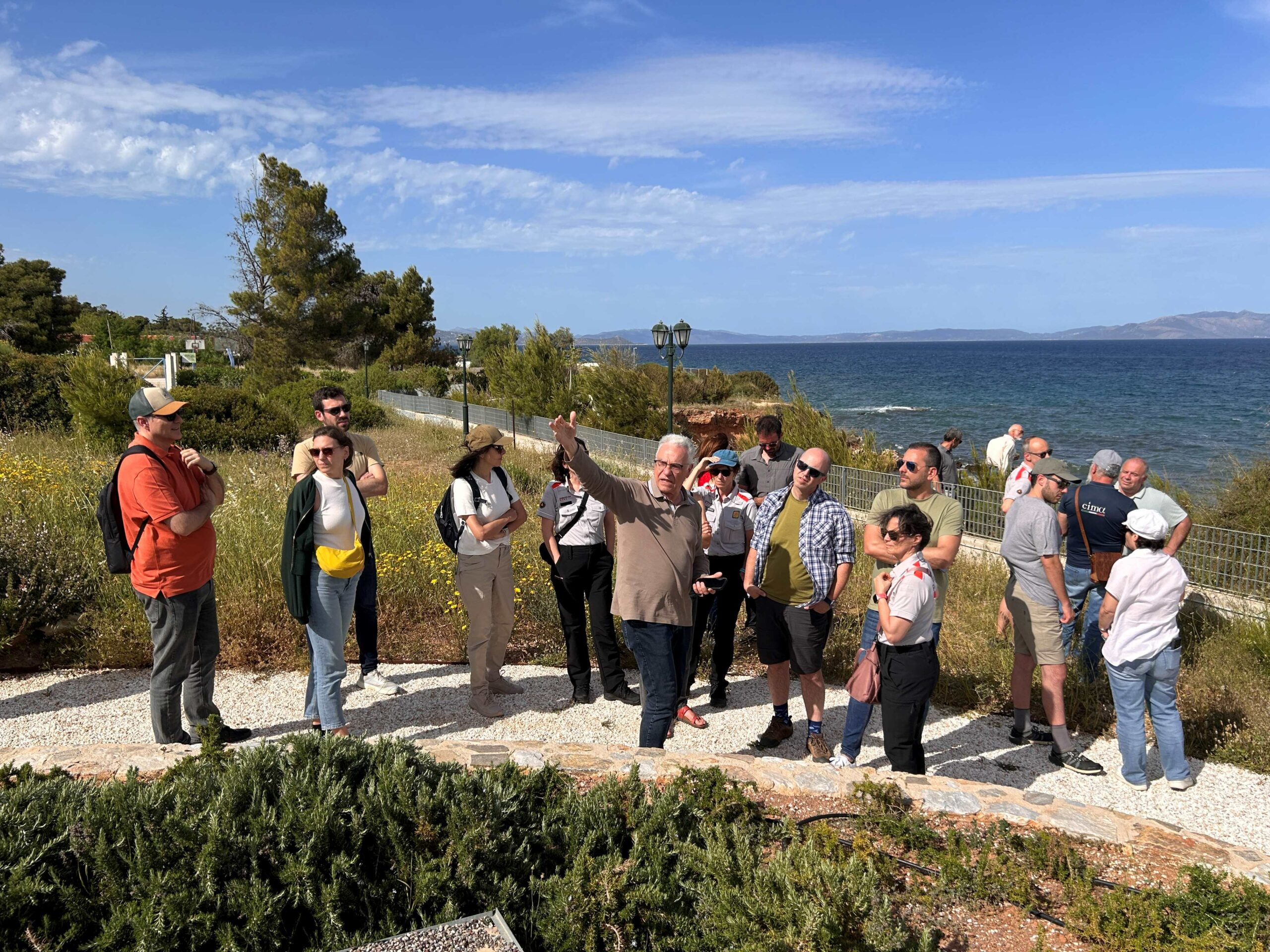
The field discussions in Attica highlighted how wildfire risk in coastal WUI areas is shaped not only by fuels and topography, but also by urban structure, evacuation capacity and seasonal population pressure. Bringing together local authorities, researchers and practitioners allowed participants to connect technical knowledge with real operational challenges. – Georgios Eftychidis (Aristotle University of Thessaloniki), Co-leader of FIRE-SCENE’s pilot 2 (Wildfire risk in coastal WUIs, tourist villages and resorts in East Attica and Rhodes Island, Greece)
ETM2 provided a platform for expert exchange, stakeholder dialogue and real-world case studies on complex wildfire scenarios, supporting reflection on risk coordination and management approaches across vulnerable WUI territories. The insights and lessons generated during ETM2 will feed into the final FIRE–SCENE event, where project results and risk governance findings will be consolidated and shared at the European level.
Initiatives such as FIRE-SCENE help strengthen preparedness and prevention capacities across Europe by fostering cooperation between authorities, researchers and local stakeholders. ETM2 showed the value of peer exchange and practical learning in advancing more coordinated approaches to wildfire risk management, and it supports the implementation of the recent Commission Communication on Integrated Wildfire Risk Management, published on 25 March 2026. It also showed the added value of peer reviews for improving wildfire risk management. – Cristina Colaco. (Directorate-General for European Civil Protection and Humanitarian Aid Operations, DG ECHO), FIRE-SCENE’s Project Officer.
Last modified: 1 June 2026